Does the Dyson Airwrap Damage Hair? — The Science Explained
The Dyson Airwrap caps heat at 150°C and uses Coanda airflow instead of heat to shape hair. Here's what that actually means for protein damage.
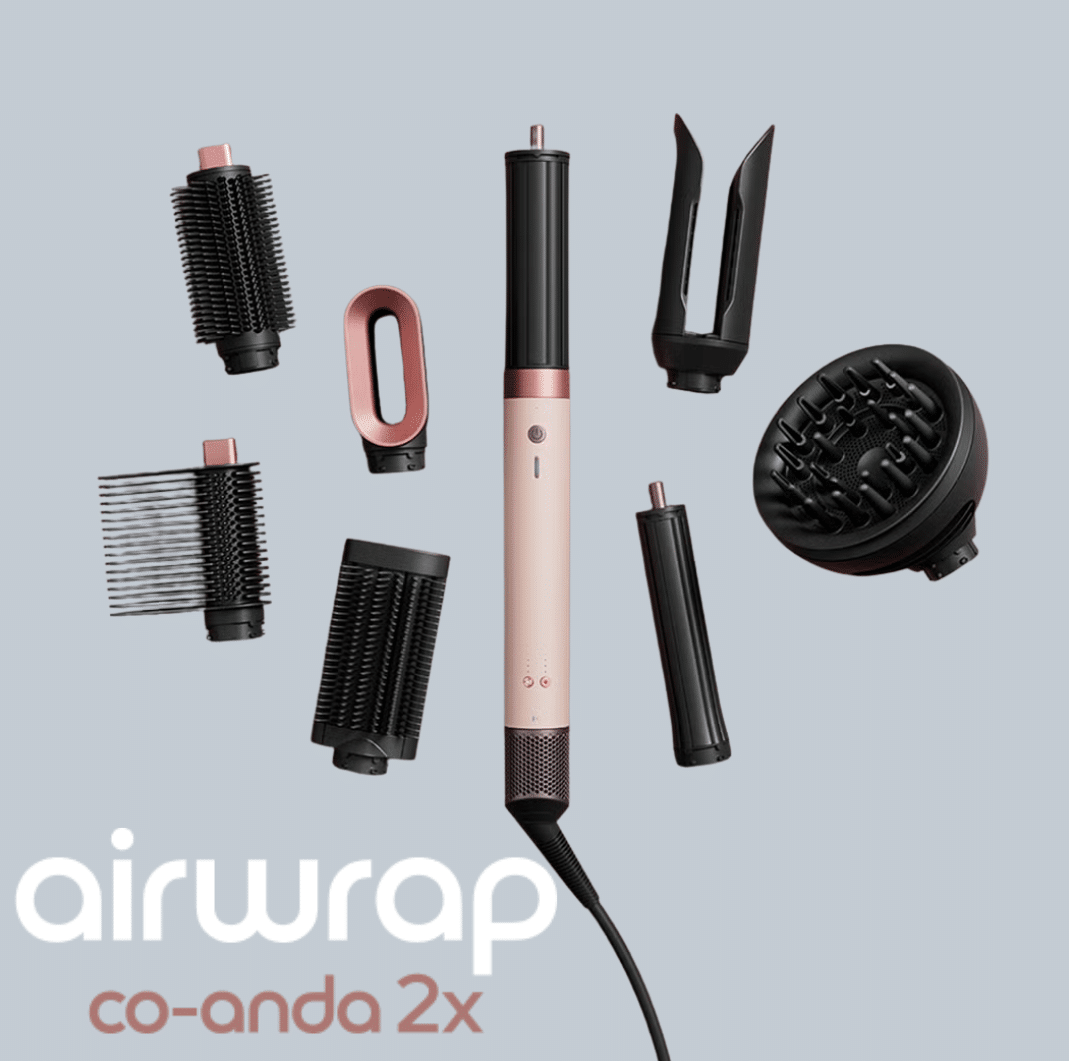
Hair damage from heat styling is a measurable thing — protein denaturation begins around 175°C and accelerates rapidly above 200°C. The Dyson Airwrap was designed specifically to stay below that threshold.
What temperature does the Airwrap reach?
Maximum measured airflow temperature is 150°C — 25°C below the keratin damage threshold. The Airwrap measures temperature 40 times per second and adjusts power to stay capped, even when held continuously on one section.
Does the Coanda effect actually reduce damage?
Yes, mechanically. Traditional curling irons clamp hair against a hot metal surface; heat conducts directly into each strand. The Coanda effect uses a column of fast-moving air that wraps hair around a relatively cool barrel — most of the styling force is aerodynamic, not thermal.
Is the Airwrap safe to use every day?
Yes, when used correctly. Apply heat protectant, keep hair to ~80% dry before starting, and don't dwell on one section for more than 12 seconds. Daily use at 150°C with these controls produces measurably less protein loss than weekly use of a 200°C iron without protectant.
Can the Airwrap split ends or cause breakage?
Mechanical breakage can happen if hair is too wet (the Coanda barrel snags) or if you try to brush through tangles with the smoothing brush. Detangle first; never style soaking-wet hair. Used as designed, the Airwrap doesn't cause split ends.
Is it safe for color-treated or bleached hair?
Generally yes — the lower thermal load is friendlier to bleached hair than a 200°C iron. Always use a heat protectant rated for color-treated hair and avoid the highest fan setting on very fragile bleach-damaged hair. The Airwrap's intelligent heat control can't compensate for already-broken bonds.
What's the difference between the Airwrap and a curling iron in terms of damage?
Three differences: peak temperature (150°C vs ~200°C), heat-transfer mechanism (airflow vs direct contact), and dwell time per section (10–12 s vs 8–15 s with manual rotation). All three favor the Airwrap on a damage-per-session basis.
Bottom line
The Dyson Airwrap is engineered to be the lowest-damage powered styler on the market. It's not 'no damage' — heat styling always trades cuticle integrity for shape — but the engineering meaningfully shifts that trade. Pair it with a heat protectant and proper technique and you have the best ratio of styling versatility to thermal cost currently available.
External sources
- Dyson Ltd. — official site — manufacturer specs and warranty terms.
- Coandă effect — Wikipedia — physics behind air-flow hair styling.
- Hair-protein damage thresholds (NCBI) — published research on heat-induced keratin damage.